"I just love seeing these small, scrappy companies and their founders fight and win. That's truly what gets me excited."— Joshua Baer
"Plant lots of seeds. Water everyone's. Repeat."— Joshua Baer's life strategy, in his own words
When the news broke, the tributes came from everyone he had spent two decades pulling into the same room — founders he funded, partners, friends — and from Senators Ted Cruz and John Cornyn, Congressman Lloyd Doggett, and the SBA's Kelly Loeffler. Search the wall by name or word, or read it all:
"The last message I received from him was, 'How can I help?'"
— Jason Ballard, founder & CEO of Icon"He saw diamonds where other people saw dirt, and he made you believe what he saw in you. He gave far more than he ever took."
— Jacqueline Samira, founder of Howdy"He's who I could always ping for advice. He'd host, for free, literally any event we ever wanted, no strings attached. We owe a lot of our growth to his perpetual push to create opportunities for others."
— Lani Rosales, Austin Digital Jobs"Josh wasn't just a name in the startup world — he was a force. Fierce, relentless, high-energy, and always willing to show up for founders, no matter who they were or where they came from."
— Nick Longo, co-founder of Geekdom (San Antonio)"It's weird to think about Austin without Josh Baer. He was just omnipresent at everything. A big supporter of the Austin music scene, too — he even created an Austin version of MTV at one point."
— Michelle Greer"I spent so many hours interviewing him when the Austin tech community was in its infancy. He was always kind and generous with his time… He leaves a grand-canyon-sized void in the Austin tech community."
— Laura Lorek, founder of Silicon Hills News"My mentor, cheerleader, investor, and friend has died… How one person could plant and water so many seeds, so selflessly, is honestly mindblowing. The rest of us will try to be better in your honor."
— Charles Thornburgh, Austin entrepreneur"The world lost one of the good guys today. Joshua Baer was the consummate entrepreneur, the soul of the Austin tech scene, a pioneer in email marketing, a caring and emotionally connected dad, and a friend to many."
— Matt Blumberg, CEO of Return Path"Nobody has built a company in the last 20 years without crossing paths with Joshua Baer… Austin has a massive hole in its heart today."
— Thom Singer, CEO, Austin Technology Council"He poured his heart and soul into creating a place for entrepreneurs to build the future, and his work and legacy is going to live on forever."
— Jeff Cardenas, CEO & cofounder, Apptronik"For all of his prodigious talents and breathtaking knowledge, Josh was simply a marvelous human being. He was decent, generous, kind, menschlichkeit and, maybe more than anything, loving."
— Jonathan Greenblatt, CEO, Anti-Defamation League"Austin isn't just weird. Austin is audacious — because Josh Baer spent decades making people feel like they could actually pull the impossible off. He was Austin's hype man, and he meant every word of it."
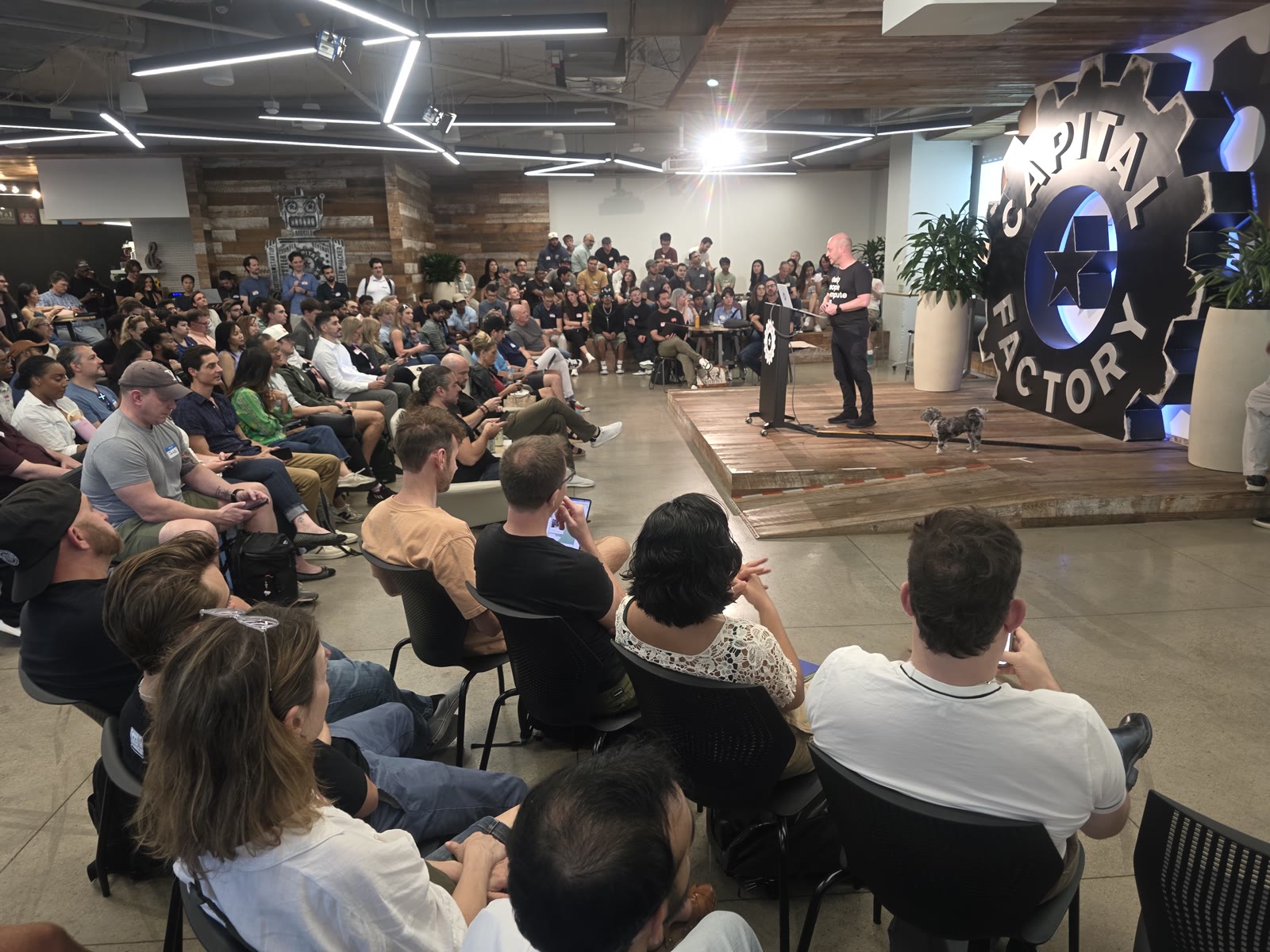
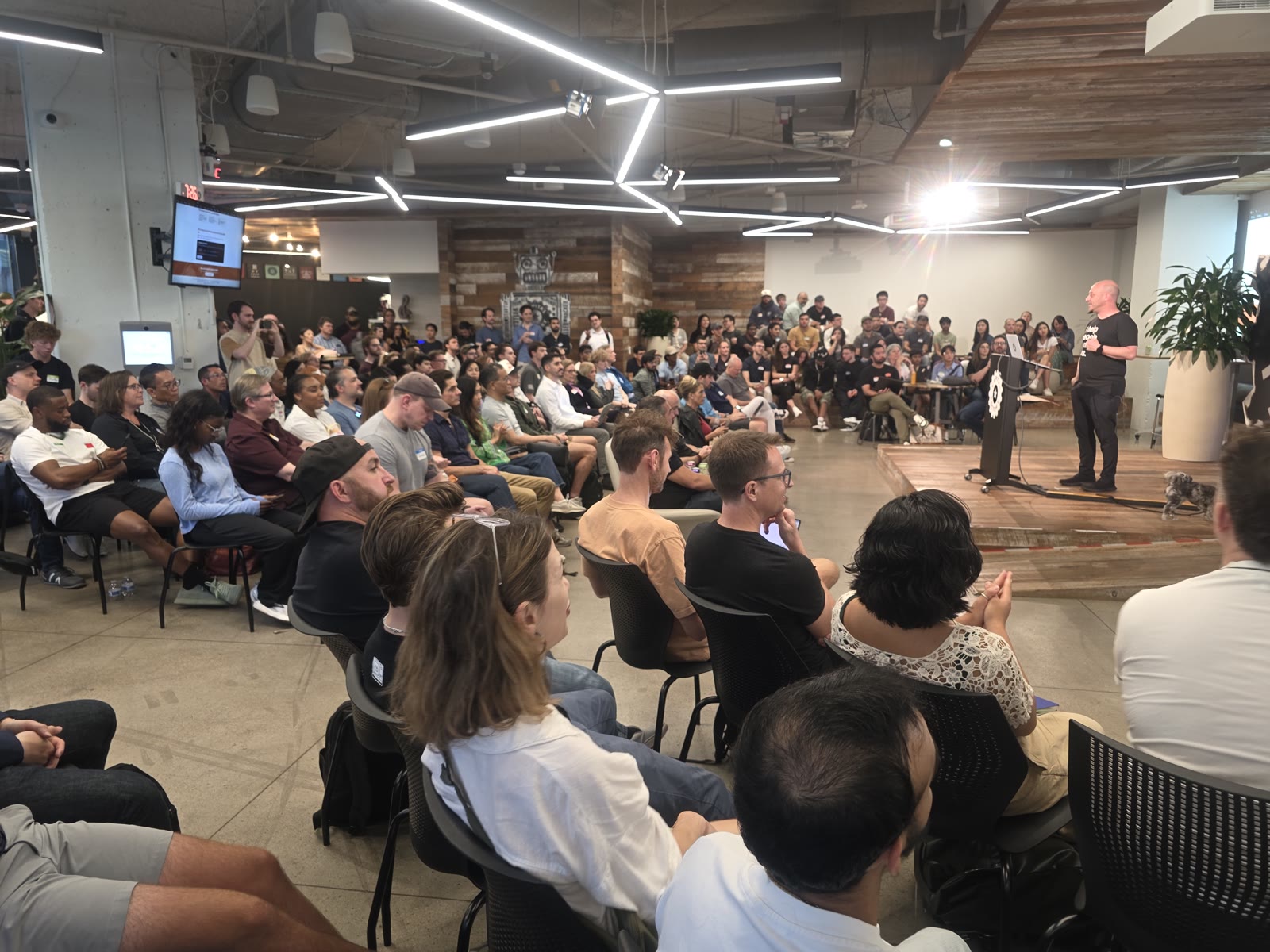
— J.B. Sauceda, host of Texas Country Reporter"I just moderated a panel with him last month. He was so thrilled about the work he was doing with AI and what the future might bring — his beautiful dog right there on the stage with us. He helped so many people build their ideas into reality."
— Omar L. Gallaga, Austin journalist"My true friend, colleague, collaborator, and mentor for nearly half my life. He truly believed in me; he truly listened to me… Baruch dayan ha'emet — blessed is the judge of the truth. His life has been a blessing. His memory is a blessing."
— Matt Cohen, friend & colleague"He believed in me before I believed in myself — the first investor in every company I've started, and he opened doors that changed the entire trajectory of my career. Josh, you and your funky shoes and neck camera will be missed more than words can say."
— Tony Aguilar, founder"Capital Factory — and Josh himself — became the center of gravity for Austin tech. A movement. Even a vibe. Always positive. Always moving. Always helping others. Always Austin."
— Sam Decker, co-founder of Capital Factory"I lost a brother today. Josh believed in me from the very beginning of Bazaarvoice… Austin would not be what it is today without Josh Baer's impact. He made the world a better place, and his memory will always be for a blessing."
— Brett Hurt, co-founder of Data.world & Bazaarvoice"He gave dignity to young entrepreneurs that most people overlooked. He pioneered Austin as the startup hub that it is today — few have touched this city in the same way."
— Liz Coufal, co-founder of Valkyrie"Capital Factory changed the trajectory of Austin's technology scene forever, and Joshua Baer was the man who drove that change."
— William "Whurley" Hurley, founder of Strangeworks"The Austin defense community simply would not be the juggernaut it is today without Josh. He built a center of gravity that transformed how we all work together, and always pushed us to think bigger."
— Zach Walker, founder of ATX Defense"Josh was a change-maker. He was well known for saying to invent a new way if you feel stuck. He dreamed big enough for everyone in the room."
— Cyndi Schultz, Capital Factory"He would be with four-star generals, with secretaries of state — wearing a T-shirt, with his dog, Stormy, with him at all times."
— Patrick Hitchins, founder of LPM Lab"I filled my parents' ears with stories of Joshua Baer and the impact he has had — and will continue to have. Josh was such a 'make it happen' guy."
— Ingrid Vanderveldt, entrepreneur"Very saddened to lose a friend, mentor, titan and business partner. I've never met anyone who worked so tirelessly to lift everyone around him."
— T.J. Clark, tech entrepreneur & investor"We grabbed seats next to each other on a flight and talked Austin startups for four-plus hours straight. By the time we landed, I'd found a friend and a partner. He was a force of nature — wicked smart, and somehow the nicest guy you will ever meet."
— Greg Welch, founder & CEO, CyberProtonics"Such a tragedy — I'm sorry for the loss of the countless number of people he impacted across Austin and beyond."
— John Banczak, COO, Casago"I have hundreds of photos from our years at Capital Factory — pitching, hosting office hours, building with my teams — but I cannot find a single one of him. He was always there. He just kept the founders he believed in as the focus."
— Daniel Senyard, founder of Shep"During SXSW, while he was interviewing Reddit's CEO onstage, he caught my eye in the crowd and called me up to pitch him directly. That was Josh — always finding the moment to put an entrepreneur in the spotlight."
— Daniel Senyard, serial founder & advisor"Josh invested in every business I've been a part of. Despite the failures, even when hairbrained emails turned into eye-rolls, he said 'Nevertheless.' That's who he was. He never quit you. A is A, Josh, forever."
— Jason Stoddard, serial entrepreneur"Josh had a clear vision for building the Austin startup community — and used that blueprint to seed others, from Washington, DC to Bentonville. He was a singular character, and a big reason we moved to Austin. Because of his generosity, I got to become a small part of this community."
— Marc Nathan, one of Capital Factory's first mentors (2009)"I lost a best friend, my greatest mentor, and my business partner. Josh helped people quit their jobs and become entrepreneurs. He was a true super connector — the ripple effect of his impact will be immeasurable."
— Bryan Chambers, president & co-founder, Capital Factory"'How can I help?' was what Josh said a few minutes into every conversation — and he meant it. My first ride in a Tesla was with Josh. He had an excitement for technology at 50 that most of us lose at 25."
— Jared Goralnick, founder"Josh and Stormy showed up at my condo with homemade chicken noodle soup Amy made, a bag of medicine, and ginger ale — then sent a nurse the next day for an IV drip. Who does that? I'll remember the soup, not the venture capital."
— Cindy Kent, Henry Crown Fellow"Thanks to Josh Baer, I have so many Capital Factory t-shirts that we had to add a room to our house."
— Bob Metcalfe, inventor of Ethernet"To be in community with Josh is to feel that you matter. It is to feel that you belong. You taught us humble generosity and true seeing."
— Di-Ann Eisnor, ex-Waze"He invited a spiritual atheist stuck in Austin to his extended family's Passover at the Four Seasons. Hug your people. Love your people. Make the most of it. Life is short."
— Brett Jenks, CEO of Rare"He was an early believer in me, and invested in both my companies. When I was helping a friend with a startup, Josh offered up space for free at Capital Factory. At his 50th birthday he gave a beautiful, emotional speech to his wife and children."
— Henrik Johansson, co-founder & president, Gembah"Josh always said 'yes' — and then, 'Here's how I can help.' And: 'You can do it.' We owe him a great debt we'll never fully repay, except in how we conduct ourselves: saying yes and helping the next person, in his image, in his honor."
— Jason Cohen, founder of WP Engine"Josh was an investor in every company I started, a friend, a fellow entrepreneur, and a true mensch. He was also the closest I've ever come to having a twin. May his memory be a blessing."
— Arlo Gilbert, founder of Osano"Joshua Baer, you truly were the godfather. You were part of the reason my family moved to Austin. We stood on the shoulders of your giantness. The impact you had is immeasurable. I know you'd want us to keep moving forward."
— Vivek Sodera, co-founder of Superhuman"He had the rare quality of making the future feel close enough to touch — always an early adopter. Just this week he'd rebuilt Capital Factory's website in 48 hours with AI, after budgeting six months and $100,000. He wanted to tinker. To learn. And he got it done."
— Eugene Sepulveda, Culturati"Josh built a village, a tribe. He didn't build it for himself — he built it for a grander purpose. He understood that the success of the American entrepreneur leads to the success of our country. He banked on it. He was a patriot."
— Nina Shelat"Joshua Baer was literally my first friend when I moved to Austin. Josh invested so much of himself into this community, into entrepreneurs, into friendships. He lived life on his own terms, surrounded by people he cared about. That is a life well lived."
— Steven Welch, CEO & founder"How many people who are great in business can you also say are truly kind? In a world where networking can feel transactional, Josh was authentic. He wasn't keeping score. He was always asking how he could help."
— Sandy Carter, ex-AWS & ex-IBM"Josh could see possibilities where others saw limitations. He wasn't just building companies — he was building communities, ecosystems, and opportunities for thousands of entrepreneurs who may never have had a chance without him."
— Sheila Lirio Marcelo, founder & CEO of Care.com"Joshua Baer and Capital Factory brought Firehawk to Texas. He cared deeply about Texas and the companies he invested in. You're a legend, and you'll be missed, Josh."
— Will Edwards, CEO of Firehawk"Nine days ago Josh texted me after rewatching his 50th-birthday videos: 'Love you bro.' He once told me: 'When you win together, it feels great. But when you go through loss together, that's when you get to see who someone really is.'"
— Adam Zeplain, mark vc"I checked PitchBook — Capital Factory is our most active co-investor, with over 15 companies where we led the first institutional round. Most of them because Josh built the place where those founders got their start."
— Krishna Srinivasan, founding partner, LiveOak Venture Partners"Weeks ago Josh was texting me late into the night helping with my company. I hadn't messaged him since 2021 — he replied in five minutes, excited, because he was already building a tool that solved my exact problem. He never lost the builder mindset."
— Ben Doherty, entrepreneur"Austin lost a builder whose product was other people's courage. His mission was simple and radical: 'I help people quit their jobs and become entrepreneurs.' He didn't say those things — he lived them, every call, every introduction, every yes he gave to a founder who had nothing to offer in return."
— Nick Capaldini, data scientist"One thing he said to me has stuck forever: 'Be a big fish in a small pond.' Austin was a small pond when he said that to me back in 2012 — he grew it into a big one. I may be a blip in his life, but he was not a blip in mine."
— Ravi Parikh, founder, MakerSquare"In 2014 I was a broke kid with an acting degree, and Capital Factory hired me as its receptionist. Josh even paid for me to attend a coding academy on his own dime — a handwritten check. I wonder if he knew he was giving me something far bigger. The story of my life couldn't be told without him."
— Desmond Garden, product & design"Josh was like a kid in a candy store with AI. Two weeks ago we just spent two hours in his office vibe-coding, and we were texting about doing another story. He loved his job. He loved people."
— Walt Maciborski, CBS Austin"I've rarely been as challenged or inspired by anyone. A true entrepreneur — he pushed, supported, questioned, rallied, embraced, and turned up with that camera around his neck. If you didn't know him, you'll almost certainly know his impact."
— Charlie Lass, 4× founder"Some people build companies. Some people build communities. Josh built a community that helped build my company. The support, encouragement, opportunities, and belief I received all trace back to a vision he had."
— Melissa Wood, founder of Formus"Many years ago I was a stranger in Detroit who reached out, and he answered my many, many questions patiently and gave me an open invitation to Austin any time. He didn't know me — and he made me feel that what looked impossible was so very possible."
— Monica Wheat, ecosystem builder"At TechCrunch 50, Josh had a time slot that wouldn't let him catch his flight home, so we switched with him. As a thank-you he gave us a basket full of snacks. That was years before all of this — a reminder of how unpredictable life is, and to cherish every moment."
— Jimmy Ku, founder, GoPlanit"Josh was one of the earliest investors in Ordoro. He believed in us when all we had was just an idea, and opened doors a first-time founder could never reach alone. Every time I walked into Capital Factory he'd stop and ask whether he could help in any way."
— Jagath Narayan, CEO of Ordoro"My entire career benefited immeasurably from Josh's tireless optimism — from his investments in the startups I worked at, to the doors he opened. My family lives an amazing life because of Josh's work. Countless others can say the same."
— Victor Trac, technologist"Josh, I remember our Ruby on Rails meetups and your well-wishing for my ventures all these years. You believed in founders long before many believed in themselves. Your impact will be felt for generations."
— Subbu Rama, co-founder of BalkanID"He made this city feel smaller, more generous, more connected, and more possible. So much of the Austin startup community carries his fingerprints — not just in the companies he backed, but in the people he encouraged, challenged, and believed in."
— Mary Brendza, Techstars mentor"When I came to Austin 20 years ago, Josh was incredibly welcoming to an open-source nerd who didn't know much about the venture world. He ended up changing the course of my life. A true inclusive connector — and a true mensch."
— Chris Aniszczyk, open-source leader"What I'll remember most are the simple moments — walking around Lake Austin with Josh and his dog, brainstorming ways to 'do it differently.' He saw possibilities where others saw obstacles. Thank you for showing us all that there is always a different — and better — way forward."
— Dave Harden, founder, Outpost Ventures"One of my favorite memories is Josh giving me a tour of the startup offices in the Omni Hotel, sitting in a crazy giant bird's nest on the 16th floor — a true Keep Austin Weird moment — explaining his bold vision for bringing all of the city's entrepreneurial energy into one place. Big Vision. B.I.G."
— Gary Forni, Central Texas Angel Network"None of us are truly building alone — we stand on the shoulders of the giants who came before us, and Joshua was undoubtedly one of those giants. He stayed steady. He showed up. He invested in others without expectation."
— Jake Crowley, managing partner, Crowley Capital"He was an omnipresent mentor, a force. He made us better — helped us grow, pushed back, encouraged, and gave us some grief when we deserved it. Rest in peace, Josh. The builders got it from here. We got you."
— Kenny Gorman, head of streaming products, MongoDB"In 2019, when Syzygy was in its earliest days, Josh and Capital Factory believed in what we were building and we won a check at an EarthX pitch competition. That support came at a pivotal moment and directly helped catalyze our Series A. I don't know if I'd be where I am without him."
— Trevor Best, CEO of Syzygy Plasmonics"On my last day at his company, he gave me a book inscribed with Dr. Seuss: 'You will come to a place where the streets are not marked… How much can you lose? How much can you win?' A reminder to live fearlessly, and with passion. Thank you, Josh."
— Minh Vu, partnerships leader"Miss you, Joshua Baer. Love you, brother."
— Dan Graham, partner at Notley"What I loved most about Josh was his constant desire to be a better human — a better husband, father, teacher, mentor, or friend. He was perfectly imperfect in his widgety little ways, always willing to learn, trying to evolve, reaching past disagreement to find the common good. It is who he was, more than what he accomplished, that I will miss dearly. Thank you for being one of the good guys."
— Mellie Price, co-founder of Capital Factory; Executive Director of Texas Entrepreneurship, UT Austin"Way back in 2006 he had just sold Skylist and was driving one of Austin's first super cars — an orange Lotus with the license plate 'email.' Every Wednesday, without fail, he'd sit in front of me and say, 'Well, what do you want to talk about today?' He taught me to go where the personas are, to think out of the box. Josh was the heartbeat of the Center of Gravity."
— Amanda McGuckin Hager, CMO & CRO at TrueDialog"As Josh's Chief of Staff, I had a front-row seat to the impact he created. He had a way of making everyone around him better — pushing you to think bigger while genuinely caring about you as a person. He became not just a mentor but a true friend."
— Kyle Hendrick, Chief of Staff at Capital Factory"Scrolling through texts from him, it's just one after another of 'Hey, checking in on you.' Or 'Let me know if I can help.' How did he even have time for one founder when he was connected to so many? He was integral to StoryFit from the very first moment, and I'm so sad for the founders who won't get the chance to have him fix their elevator pitch."
— Monica Landers, founder & CEO of StoryFit"His life strategy — to plant lots of seeds, water everyone's, repeat — will endure for years to come. I'm grateful for the partnership we shared and for the infectious energy Josh brought to every engagement."
— Vanessa Wyche, Director, NASA's Johnson Space Center"When I first came to Austin, I said often that the tech community has a unique rising-tide mentality unmatched by other ecosystems. Josh was one of the first hands I shook in Austin — and the first person to put that idea in my head. The stories and impact of Josh will be told and felt for generations."
— John Berkowitz, President of Real Estate at Lower / GM Movoto"Josh and Capital Factory were the very first investors in Fetii. He was one of the first to believe in Justin and me. Josh wasn't just an investor or mentor, but a friend who was always searching for ways to help. That's who he was."
— Matthew Iommi, CEO of Fetii (YC S22)"Josh and Mikey Trafton took a chance on Zac and me during the early days of the Capital Factory accelerator. Like many Austin entrepreneurs over the last 16 years, without them we would not have become who we are today. He shaped a community whole-cloth that evolved into an economic engine."
— Andy Fletcher, CXO & entrepreneur"So much has already been said about Josh that there is little I can add. I'll simply say thank you — for all you were to me, and to Austin. Josh, zichrono livracha." (may his memory be a blessing)
— Venu Shamapant, founder of LiveOak Ventures"I just wanted to pitch bending the rules so I could take his class at UT. From there he took me under his wing as an intern, then an employee right out of college — forming the skills I use daily and forging lifelong friendships at Capital Factory."
— Eric Moe, VP of Marketing"When I was starting Inorsa, I had very little. Josh didn't have to make time for me, but he did. He gave us our first office and offered help when I had nothing to offer in return. He made early founders feel seen before anyone else did, and helped shape many of our paths."
— Sean Shahini, P.E., CEO at Inorsa"You gave me one of my first legitimate tech jobs during the chaotic days of the dot-com boom. You literally shared a couch with us, taking me under your wing to teach me the basics. You didn't just build technology; you jump-started lives and put green technologists on the right path."
— Thomas B., Group Product Manager at Google"Joshua Baer was the heart and engine behind Austin's evolution into a tech powerhouse. If you've worked in any venture-backed tech in ATX over the past 18 years, Josh was likely a thread somewhere in your story. Austin is immeasurably better because of him and immeasurably diminished without him."
— Eliza Cohen Belbeck, revenue leader"I've known Josh since 2011. At 3 Day Startup he evaluated my pitches the same way I evaluate others' today, and I was at Capital Factory's ribbon cutting. There is no story of Austin's entrepreneurial rise without him in it."
— Jeff Zhao, Associate Director, UMKC Technology Venture Studio"He co-created spaces and experiences at Capital Factory and Austin100 that continue to be personally transformative and meaningful. Sparks and seeds. Gratitude and heartbreak."
— Crista Bailey, business development & board director"Starting Capital Factory 17 years ago, he honestly built the Texas startup ecosystem into what it is today. The Austin tech scene we know now doesn't look the way it does without him."
— AJ Smith, lead investor at OutlanderVC"Such a stomach punch. He invested in two of my companies. Honor Josh: do everything at 100% (like him). Push the envelope (like him). Follow your dreams (like he did). And don't wait."
— Larry Warnock, Partner Emeritus, Ring Ventures"A remarkable connector of people, capital, and ideas, central to the startup scene in Austin. Josh was always so friendly, optimistic, inclusive and open. May his memory be a blessing."
— Sewell Chan, journalist; former Texas Tribune board member"In an ecosystem full of false promises, Capital Factory puts their money, network, facilities and resources where their mouth is — the value-add investor so many others only claim to be. Josh, your spirit lives on."
— Edward Nass, founder & CEO at AIRIA"'If you are a startup in Texas, all roads lead through Capital Factory' is something I've told hundreds of founders. In startup speak, I hope we can 100x the number of Joshua Baers in the world."
— Kevin King, startup business development at AWS"For 27 years Josh poured himself into Austin's startup and tech scene — from his early days at Trilogy, to building Skylist and OtherInbox, to founding Capital Factory. Last year he was deservedly inducted into the Austin Tech Hall of Fame."
— Austin Technology Council"As the founder of Capital Factory and a long-time friend of Techstars, Josh dedicated his career to backing unstoppable founders and shaping the Texas startup community into a powerhouse. His legacy will live on in every founder who dares to build."
— Techstars"For more than a decade, Josh led the department's Longhorn Startup program, inspiring students to think boldly and build companies that create real-world impact. Through his mentorship, he helped countless students take their first steps as entrepreneurs."
— UT Austin Computer Science"The best way for me to honor Joshua Baer's memory is to tell the story of the founding of his passion — Capital Factory. Time may have softened some of the edges, but the spirit of what we built remains clear."
— Bryan Menell, co-founder of Capital Factory"Some people don't just help build companies — they help create momentum that keeps moving long after they're gone. Josh was one of those people. Speed and passion. He truly was a ringleader."
— Sam Decker, co-founder of Capital Factory"I'm still processing the void we now have. But our community always finds a way to thrive — that, too, is part of what Josh built."
— Dean Cruse, GTM advisor & board member"Reading this brought back a flood of memories from 2009. What an honor it was to be part of that first Demo Day — and that feeling afterward that we'd actually pulled it off."
— Cindy Y. Lo, event producer"I fondly remember so many nights at Capital Factory and your happy-hour networking events. Y'all made Austin Austin. Let's all make his legacy last."
— Melissa Simpler, technology executive"I remember the early conversations about planning Capital Factory — with Josh, Sam, Bryan, and Andrew Busey. Your post triggered so many memories. Thanks for everything."
— David Altounian, board director & former CEO"Whenever Josh talked about Amy, he radiated happiness and joy. He always wore his love for her on his face and showed it in his actions — he wanted to give her the world, and never stopped. He told us again and again that she gave him everything he'd ever wanted and so much more."
— Debra Brenner Hurt"Even though Josh was probably the most prominent person in the Austin startup scene, he was quick to hand the mic to others — both literally and figuratively. His main goal was always to introduce the dignitaries who came through Capital Factory to the founders and investors in its orbit. His impact will be felt in our community for decades."
— Brent Wistrom, Austin Business Journal"In the startup world, many of us were shocked by the news of Josh's passing. He was always helping connect founders with those who could help — and the first to pass the mic to others. The lights in Austin are a little bit dimmer this week, as the startup flag goes to half-mast."
— Nigel Singh, CFO"I once reached out to ask if he'd consider joining our advisory board. His response was incredibly warm, enthusiastic, and generous. Reading the tributes since, I recognize the same qualities I felt in that one brief interaction — he genuinely loved entrepreneurs and cared deeply about people."
— Fred Elabed, founder of Lab Alley"Josh brought people together and made us all better. He was a super connector — the wizard behind the scenes, sprinkling his pixie dust to make magic happen. His first lesson when he started Capital Factory was: fail quickly, learn, and iterate. But the thing I learned most from him was simply loving people. Putting people first."
— Russell Hinds, managing director, RSH Ventures"I was totally surprised at how easily he reached out to me personally when he saw an opportunity. His passing feels stunning — I can't help but feel how many lives he was connected to. He has become part of the nervous system of the city."
— Wyatt Rodgers, Shiftwave"If you knew Josh in the early 2000s, you heard him say it: 'You should move to Austin.' He wasn't recruiting for a company — he was recruiting for a city. He'd invite you down, introduce you to everyone, and ask for nothing back. But there was one startup he was determined to get right: a family. Happy Father's Day, Josh."
— Chirag Chaman, fintech investor"Josh brought true entrepreneurship to the startup world in Austin. We miss him dearly, but we find comfort in celebrating his memory and sharing a piece of his beautiful spirit with all of you."
— Techmap"Thank you for changing the course of my life, Joshua Baer. I transformed in so many ways under your guidance, and through the friendships I built with those you connected me to. Thank you for your belief in me, your passion, and your wide-open heart, full of excitement. Wish you were here."
— Dara Harmon, builder & operator"He brought together the best startup minds from around Texas. He made you feel like you belonged — and that you should be doing these hard things. And he didn't sugar-coat his feedback; he told it to you straight, then connected you with another bright mind to keep learning."
— Jason T., startup founder"For a lot of founders, it was the first door they walked through — a room that made you feel like you belonged before you knew anyone in it. That doesn't happen by accident. Josh built it, showed up for it, and kept showing up for over two decades."
— Sam Palazzolo, Capital Factory mentor & LP"He believed Austin could be a place where founders got a yes when everyone else said wait — and he spent two decades making that belief true for thousands of people. The best way we can honor Josh is to continue the work he started."
— Arturo Piña, GP at AP1.VC"He gave me my first real opportunity in investing and helped shape the trajectory of my career. We launched the Texas Fund, invested in more than 100 companies, and spent countless hours on roadshows across Texas. And of course, Stormey — his sidekick, who met more founders than most investors. Fly high, Josh and Stormey."
— Jill Samani, Strategic Advisor, CAZ Investments"So do not grieve beside this stone — the work I loved was not mine alone. It carries on from hand to hand. I have not left, for here you stand."
— Michael Anderson, from "A Tribute to Immortality (for Joshua Baer)""From the way he'd answer any question — 'Howdy Ross! What's holding you back? How can I help get it out of the way?' — to his signoffs (Yeehaw!), Josh reminds me that communities don't just happen. They need generous, giving leaders who almost never get the credit they deserve. Will miss you, Josh. Yeehaw!"
— Ross Baird, CEO of Blueprint Local"Josh was the best connector of people and ideas I have ever met. I took his advice, quit my job, and moved my family to build in Austin. His favorite question was always, 'How can I help?' Josh's legacy and his magic live on forever."
— Marcelo Vieira, tech founder"Joshua wasn't a legend because of a title, a building, or a company. He was a legend because of the countless founders he helped believe that something more was possible. He knew founders need more than capital — they need people who believe in them before the metrics do. Thank you, Joshua, for the doors you opened and the rooms you made room in."
— Cherie Werner, founder of FIESTA"My introduction to Capital Factory came through FIESTA. As Canadian entrepreneurs from Montreal, my husband and I found more than a place to work in Austin — we found a place to learn, connect, and be inspired. I never had the privilege of meeting Joshua, but I'm deeply grateful to him for building a community that welcomed entrepreneurs from near and far."
— Dr. Tara V. Wilkie"He was a positive force in my life for the two years I knew him — a fellow Carnegie Mellon alum, an amazing family man. I remember how souped Josh was when I landed an investor during Austin Tech Week, an event he founded. We were plotting getting Carnegie Mellon involved in an Austin AI event this year — before I knew it, those were the last words I spoke to him."
— Kwaku Jyamfi, CEO of Cyrtan Energy"I can directly attribute my passion for entrepreneurship as economic development to an invite to Capital Factory in 2011 and a conversation about 'changing communities through startups.' He didn't just help build companies. He helped build people — and in doing so, stronger communities that will benefit for generations."
— Zachary Barker, IEDC Director of Entrepreneurship"I entered Capital Factory thinking I'd come to share what I'd learned in the enterprise world. What I didn't expect was how much I would learn in return — to test assumptions quickly, focus on customer value, and challenge conventional thinking. Joshua created an environment where those worlds could intersect, and Austin is stronger because of it."
— Rocio Pelayo, founder of Cielo Global Consulting"It's hard to imagine a world without Josh's influence. I would never have met my wife and so many dear friends and business partners. Without people like Josh, Austin is just another city — Capital Factory made it feel like home the moment I arrived."
— Will Cline"He was a builder of people, first and foremost. More than the first check in many startups, more than the students he taught at UT — it was his generosity and advocacy for others, and a life strategy of: plant lots of seeds, water everyone's, repeat. The best way we can honor him is to continue that work."
— Luis Martinez, PhD, investor at Capital Factory"I first met Joshua Baer at a startup event in San Antonio around 2014, pitching my first startup. He helped all kinds of people believe in themselves and advocated for every type of entrepreneurship. Our communities are better off — economically and in sustainable innovation — because of 'gente como él.'"
— Sandra Gonzalez Lamb"Many people saw Capital Factory as a building, a brand, an institution. Josh never did. To him, it was all about the people."
— shared by Josh's team at his Capital Factory memorial"He let everybody be themselves. He hired a bunch of super sweet, super weird people, and he never tried to change us."
— shared by Josh's team at his Capital Factory memorial"Capital Factory is the center of gravity for startups. What I really believe is that Josh was the center of gravity for all the people who wanted to create a different future."
— shared by Josh's team at his Capital Factory memorial"Be generous with your time. Open doors for others. Make the introduction, take the call. Encourage that founder who needs encouragement. Share your bright light with the world."
— shared by Josh's team at his Capital Factory memorial"Josh was a builder of people. At his memorial, everyone said a version of the same thing: he saw something in me before I saw it in myself. He built something designed to outlast him, and now it is on us to carry it forward."
— T.J. Clark, on Joshua Baer's Capital Factory memorial"It was Josh who first took note of my background and coaxed me into his madcap mission — first as a mentor to founders, then as a small investor — promoting Austin and Capital Factory globally as the ideal landing place for brilliant immigrant founders from every corner of the planet. He was half Polish, and we had just started talking about journeying into his ancestral roots together. To have him so horrifically ripped away now is acutely painful and cruel."
— Fred Schmidt, Capital Factory mentor & investor (since 2013)"He kept score of the good turns, not the grievances… Josh was that idea made real."
— Brad Feld, co-founder of Techstars & Foundry Group
In the days after, his business partner T.J. Clark shared something Josh had said only a week before he died — a reflection that, in hindsight, reads like a closing thought:
"As I've gotten older, I've found myself thinking less about outcomes and more about people. Less about money and more about relationships. Less about what I built and more about how others felt while building it with me… The projects matter. The work matters. But in the end, what people remember is often much simpler. They remember how we made them feel."— Joshua Baer, shared by his partner T.J. Clark, June 2026
There was a look to him, too: the bald head and the broad, dimpled smile, a T-shirt that read "I help people quit jobs," and a little Maltipoo named Stormey tucked under one arm as he worked the room. He wore colorful shoes — each pair with a backstory — munched candy through interviews, and, for all his fame, was forever handing the mic to a younger founder. You stopped and looked.
He was a transplant who fell hard for Austin — its live-music scene, a plunge into Barton Springs. He and Amy built the Baer Family Foundation for disadvantaged children and inclusive entrepreneurship, supported the Anti-Defamation League, and gave to ACL Live before it had a home. Last year, Austin inducted him into its Tech Hall of Fame.