Noninvasive drug delivery past the blood-brain barrier for treatment of neurodegenerative disorders
Confirmed by founderMusiQ Bio is developing a programmable brain delivery platform that uses targeted microbubbles and ultrasound to noninvasively deliver therapeutics across the blood-brain barrier. We are initially focused on treating neurodegenerative diseases like Huntington’s disease, where delivery remains one of the biggest barriers to successful treatment. Supported by patents exclusively licensed from UT Southwestern and multiple peer-reviewed publications, our preclinical data demonstrates >20x improved targeting selectivity versus competing microbubbles and >10x greater therapeutic outcomes compared to drug alone, with further proof-of-concept studies underway
See something off about this company?
Sina Khorsandi
founder
manwal
other
Many neurodegenerative diseases such as Huntington’s Disease are extremely difficult to treat due to the blood-brain barrier, which blocks promising drugs from reaching the brain. Current administration routes are either too invasive, like intracranial injections that require over 12 hours of intensive neurosurgery, or not specific enough, like intrathecal injections that flood the entire brain and cause unwanted side effects in non-diseased brain regions.
MusiQ Bio has developed MsQ, a targeted, ultrasound-activated microbubble platform that noninvasively delivers drugs across the blood-brain barrier only into diseased brain regions. Unlike existing microbubble platforms, MsQ requires both tissue targeting and ultrasound exposure to release its drug payload, creating a "two-factor authentication" system that improves therapeutic outcomes while minimizing off-target exposure. The result: gene therapies that are delivered noninvasively only into the brain regions that you want, with preclinical data validating complete gene knockdown.
Scientific Traction: Our platform's broad efficacy is demonstrated across oncology models, validating MsQ's mechanism that we are now applying to our primary focus: noninvasive brain delivery for neurodegenerative diseases including Huntington's. • Published platform validation in leading peer-reviewed journals, including Nature Nanotechnology, demonstrating robust preclinical efficacy and translational potential. • Achieved >20× greater targeting selectivity than competing microbubbles in vivo through a 5× increase in target-cell delivery and 4× reduction in off-target uptake. • Demonstrated strong therapeutic efficacy with MsQ-STING immunotherapy, including 100% complete responses in melanoma, 60% complete responses in ER+ breast cancer, and a 75% increase in median survival in metastatic triple-negative breast cancer models. • Delivered siRNA to solid tumors with complete target gene knockdown in vivo, validating the platform's ability to deliver nucleic acid therapeutics. • Expanded the platform to blood-brain barrier targeting and are advancing proof-of-concept studies for noninvasive delivery of gene therapies for neurodegenerative diseases, including Huntington's disease. Business Traction: • Secured $175K in dilutive and non-dilutive funding to advance platform development and validation. • In active diligence for over $1M in our current financing round, with terms agreed • Built a defensible IP position with two PCT patent applications and an exclusive license from our originating institution. • Received support from leading foundations and strategic industry partners, including Bracco, for future clinical-stage development opportunities. • Established relationships with CDMOs, CROs, and regulatory, clinical, drug development, and CMC experts to support IND-enabling studies and clinical translation. • Engaged in active partnership discussions to expand the platform into neurodegenerative disease indications.
www.cbsnews.com
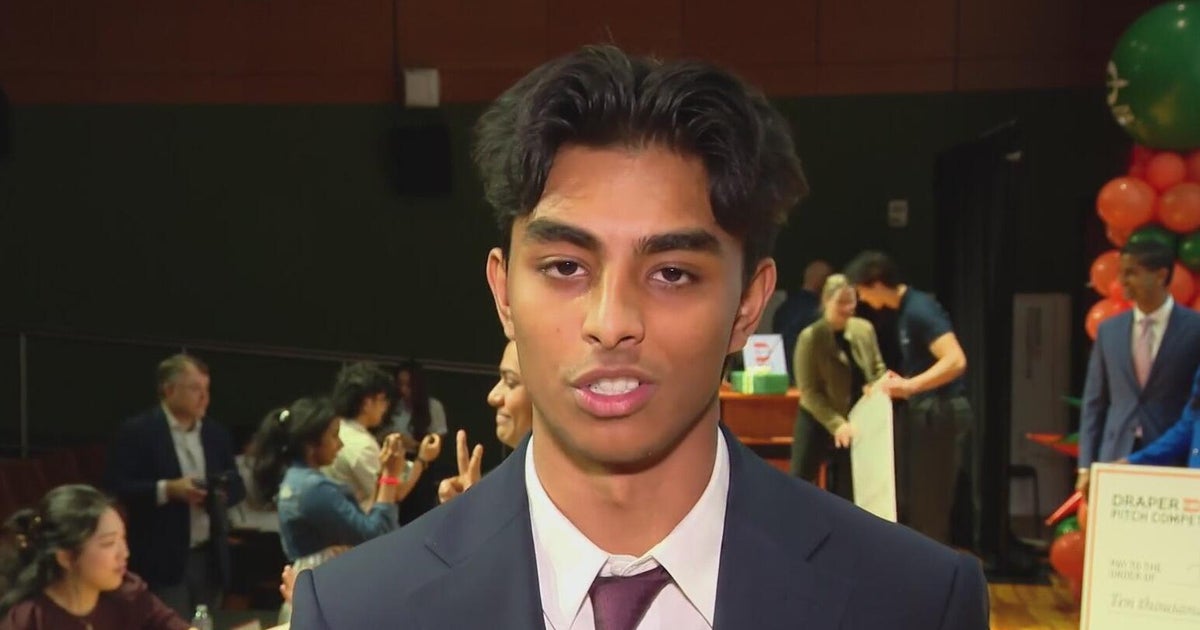
Students and alumni at UT‑Dallas took part in the Draper Pitch Competition, a “Shark Tank”-style event where three finalist teams presented ideas ranging from AI tools for lifeguards to a voice‑activated alert system. Competitors described the experience as nerve‑racking but rewarding, with some noting that past setbacks ultimately helped them qualify for this year’s prizes. Not everyone walked away with the top award, but participants said the process was exciting and pushed them to do their best.